- SWAGIFY Money Boy Bookmarklett
He calls himself “The Swagger”, always chillin’ with Gucci bandana and Louis Vitton belt buckle. He’s the hottest shit on the German-speaking web – MONEY BOY – 4 million views on Youtube!!

google.de swagged
whitehous.gov swaggedAnd here’s what we everyone was waiting for – the SWAGIFY Bookmarklet!!!
Add Money Boy swag to any website!!!! (Drag’n'Drop this into your tool bar to use it on any website)Original Website: http://tobi-x.com/swagify/
Credits: SWAGIFY Bookmarklett by TBX, GIF help from SteveK und original code von Cornify
- Honey Laundering and Authenticity
It’s hard to find just one or two things to excerpt from Jessica Leeder’s great investigation into the large amount of global crime that has grown up around something as simple as honey. It turns out that, in response to U.S. and E.U. trade rules designed to keep antibiotics out of the honey supply, a variety of middlemen have turned up in parts of Asia to conceal the origins of honey–a practice that has been met with equal amount of money spent on tracking down the honey launderers.
Most honey comes from China, where beekeepers are notorious for keeping their bees healthy with antibiotics banned in North America because they seep into honey and contaminate it; packers there learn to mask the acrid notes of poor quality product by mixing in sugar or corn-based syrups to fake good taste.
None of this is on the label. Rarely will a jar of honey say “Made in China.” Instead, Chinese honey sold in North America is more likely to be stamped as Indonesian, Malaysian or Taiwanese, due to a growing multimillion dollar laundering system designed to keep the endless supply of cheap and often contaminated Chinese honey moving into the U.S., where tariffs have been implemented to staunch the flow and protect its own struggling industry.Much later in her article, Leeder notes that since the honey laundering started in earnest about a decade ago, several countries that produce very little amounts of honey enjoy very large honey exports.
Despite the arrests, the honey industry has been watching suspect import numbers climb.
They are particularly incensed by three countries that, ten years ago, exported zero honey to the U.S., according to Department of Commerce data. India, Malaysia and Indonesia are mysteriously on pace to ship 43 million kilograms of honey into the U.S. by year’s end.
“It is widely known those countries have no productive capacity to justify those quantities,” said Mr. Phipps, the honey markets expert.The rest of the article, which is well worth reading in full, points out different methods for concealing honey’s origins, strategies for combatting the fraud, and a sort of legal back and forth that seems out of place for what feels like a pretty ordinary food item.
In reading this, though, I was reminded of signals suggesting that honey may not be the only food subject to similar sorts of fraud attempts. For example, in late 2009, a group of students decided to use DNA analysis to try to verify the origins of their foods–and found that 11 of the 66 foods they tested were mislabeled. Not surprisingly, the mislabeled stuff was expensive–sheep’s milk was actually regular old milk, sturgeon caviar was really Mississippi Paddlefish.
And DNA testing–the cost of which keeps dropping–isn’t the only tool at a consumer’s disposal for testing food origins and chemicals. A group of Canadian chemists have developed a little strip–sort of like a piece of paper for testing p.h. levels–to see if a food item contains pesticides, for example.
As of now, most of these stories about food fraud have received relatively little public attention. But it’s interesting to imagine what would happen if stories about honey laundering and the like started gaining traction–and what sorts of reactions it could spur. Certainly, we’d see consumers examining their Florida orange juice, California cheese and so on a lot more closely. And, of course, we’d also see food companies responding by engaging in a lot of desperate marketing to demonstrate the authenticity of their foods. And many more middle men trying to conceal their supply chains.
At some level, I think that scenario is only a matter of when, given that, over time, we really won’t need large governments to invest millions of dollars to track down the origins of our foods. With pesticide test strips, cheap DNA sequencing and the like, the scenario above–of increasing fears of food fraud–may only be a matter of when. - Horoscoped

Do horoscopes really all just say the same thing? We scraped & analysed 22,000 to see.See our completed meta-horoscope chart and make up your own mind.
We’ve also created a single meta-prediction out of the most common words..
How we did it

How do you gather 22,000 horoscopes? Obviously you could manually cut and paste them from one of the many online Zodiac pages. But that, we calculated, would take about a week of solid work (84.44 hours). So we engaged the services of arch-coder Thomas Winnigham to do a bit of hacking.Yahoo Shine kindly archive their daily predictions in a simple and very hackable format (example). Thank you! So Thomas wrote a Python script to screen-scrape 22,186 horoscopes into a single massive spreadsheet. Screen-scraping is pulling the text off a website after it’s displayed. Python is a programming language. You can use it to write scripts that only gather the specific text you want. Then you run it multiple times so it mines an entire website.
Well, it’s not quite that easy. Big sites like Yahoo have ‘rate-limiting’ on their servers. That means if you access a page too many times too quickly, it thinks you’re a hacker and deploys all kinds of anti-hacking counter-measures. Initially, Thomas set his scraping speed too high (once every 10th of a second) and his IP got instantly banned from Yahoo for 24 hours. After some experimenting (and more bans), he found that a two second delay between scrapes prevented the defense mechanisms from kicking in. The script was set to run in the background (while we smoked cigars and discussed the empire). 12 hours later, we had our 22,000 horoscopes in a single file!
We can’t share the 9.5MB spreadsheet with you because it’s Yahoo’s copyright. But here are the Python scripts should you feel like recreating the experiment.
https://gist.github.com/776219
https://gist.github.com/776228Filtering it down
So every different type of horoscope got sucked up – career, teen, love, daily overview. Who knew there were so many? It was felt, though, that career & love predictions would have their internal biases i.e. lots of mentions of work, career, love, marriage etc. So we opted to just analyse the generic daily horoscopes for each sign. A total of 4,380 (365 per star sign).Word Analysis Version 1
We used an online tool called TagCrowd to find the most common words. I prefer it to Wordle. You’ve got better control over any ‘noise’ in the signal, because you can not only filter common words (“and”, “for”, “is” etc) but also a special ‘stoplist’ of words you’ve chosen.
So we broke down the most common 50 words to see if there are any patterns of unique words. This is what was revealed:

You can see the full data in a Google spreadsheet here.
Word Analysis 2
It struck me that several words in the top 50 – like “someone”, “really”, “quite” – were just qualifiers and not really that revealing. You’d find them in any English word analysis.
So we stripped those kinds of words out (see our stoplist). And lo! A fresh set of unique, revealing and more accurate words appeared in the top words per sign.

Can I just say that I have no personal interest in horoscopes. I don’t know what the various characteristics of each star sign are meant to be. So you’ll have to tell me if any of this corresponds to folklore.
This was the data we used to create our meta-chart. Check out the final image. Or see all the data in this Google spreadsheet.
Meta-Prediction
One more thing though. This analysis appears to reveal something. The bulk of the words in horoscopes (at least 90%) are the same. That’s not a full, proper statistical analysis. (If you are a statistician and you want to do a proper analysis, please get in touch)
The cool thing is, once you’ve isolated the most common words, you can actually write a generic, meta prediction that would apply to all star signs, every day of the year. Here it is.

The Future
As ever, I’ve laid out my whole process and all the data here: http://bit.ly/horoscoped.
That way it’s all balanced and you can make up your own mind. Typical Libran!
Concept & research & design: David McCandless
Additional design: Matt Hancock
Additional research: Miriam Quick
Hacking: Thomas Winningham
Source: Yahoo Shine Horoscopes
Code & Scripts: Here and here
Data & workings: bit.ly/horoscoped


- Richie Hawtin Interview – 10th Anniversary of DVS
On Saturday, we bumped into the prolific Mr. Hawtin, a digital DJ pioneer and the guy who originally paved a road for much of our work today. Ironically, January 2011 is the 10-year anniversary of the ground breaking announcement that really kicked off the digital DJ movement. Final Scratch 1, co-developed by John Aqcuaviva and Richie Hawtin. We took a few minutes to talk to Richie on camera, and he got into the above interesting conversation with Ean about the anniversary of DVS, what’s next for him and what’s next for the DJ world.
Check back in with us over the coming days as our team continues to compile video, photos and data into a series of articles on our favorite moments from NAMM.
- Should You Work for Free?

Jessica Hische has created this lovely flowchart that makes it easier for creatives to decide whether they should work for free or not. As you may have guessed, the answer is “No” for most cases but there are some exceptions to this rule. You just got to love Jessica’s honesty in answers like this:
Did they promise you “exposure” or “a good portfolio piece”?
➔ This is the most toxic line of bullshit anyone will ever feed you.The flowchart is completely crafted in HTML / CSS and can be translated using Google Translate. You can also download the JPG version or wait for the prints to come.

 Jessica Hische is a Brooklyn based designer, illustrator and typographer — find more of her works on jessicahische.com.
 - Korg’s Kaoss Pad Quad is a Touchable Multi-Effects Box for Under $350

In what is proving to be a NAMM week bonanza for lovers of hardware effects, Korg’s Kaoss Pad Quad may be the best bang-for-the-buck. You can control up to four effects simultaneously, all via the trademark KAOSS-style touchpad, triggering effects you want via single-button toggles. (In fact, this device reminds me in a good way of the superb but sadly now-defunct Entrancer KPE-1 video device, in that everything is neatly accessible.)
Plug in your input from an external source or use the onboard mic input, then control effects from the touchpad with multi-color LED effects for visual feedback. There are four basic modules – looper, modulation, filter, and delay/reverb – each with variations, so that Korg promises 1,295 combinations. (That’s an utterly meaningless number to me, but I’ll take their word for it.)
There’s also a “freeze” effect for each module, so you can lock its settings in place. Some effects:
- Multi-mode looper with reverse and loop slicing.
- Vinyl break.
- Ducking compressor.
- Automatic BPM. But real men and women use the onboard tap tempo instead, so pretend you didn’t read that.
- Pitch shifter, grain shifter.
- Reverb, delay, tape echo.
All that’s missing, really, is MIDI input – it’s intended as a self-contained device, and any sync will be up to its auto BPM feature or tapping in tempos.
If you’re in my house, you’re not allowed to use the fake vinyl break effect. Sorry, them’s the rules. (Keep them for the next time you need to score an MTV reality show.) But otherwise, this looks useful. And at this price, with this kind of ready-to-play control, the whole device looks pretty irresistible. Korg’s ability to keep churning out KAOSS stuff people love is kind of ridiculous.
Kaoss Pad Quad [Korg]


Reblogs for 20110115
- Arc, A New Design from monome Creator: After Grids, Encoders

You’ve just created the design that, more than any other, was the signature of electronic music making in the first decade of the 21st Century. What’s your second act?
Having made the monome grid controllers the biggest design hit in music creation in the last few years, then moved to a farm in upstate New York to do some … farming (really), monome’s Brian Crabtree now and Kelli Cain have made public what’s next. Think really big knobs.
The design makes some sense to me, intuitively, already. Livid tried the obvious solution of combining encoders with arrays in its Code, but having a big cluster of encoders, while interesting, seems that it’d have limited applications. It works for Livid, but given the widespread impact of the monome, you’d expect something more generalized, more universal.
Arc could be that. They’re large, “ultra-high resolution” encoders. The monome sacrificed sensitivity for quantity with an array of on/off toggles; Arc does the reverse. The idea is presumably that you’ll really care about these big knobs. Two- and four-knob versions are promised; the four-knob variant seems like it might have the greatest appeal, depending on the price difference. The visual feedback on the side are “high-density LED rings,” but they also have “variable brightness,” meaning that they could be more visually compelling than is apparent in still photos.
In addition to being knobs, each knob is a push-button. Unlike the monome, it’s hard to see this being the only controller you’d use. It is easy to imagine it used in conjunction with another controller, though, monome or otherwise. I’m imagine that as on the monome, you’ll be able to modify the design to add tilt sensors and the like.
Like the monome before it, the arc makes no sound. It requires computer software and the OSC (OpenSoundControl) protocol in order to control software, connected through a USB port. And so like the monome, you can expect that a lot of its value will be software inspired by the quality of the design and even the high-value construction of the item. If it’s like its predecessor, the arc will be an attractive window through which clever software designers imagine new musical contraptions.
The obvious comparison here is to the humble, US$45 Griffin PowerMate, a single metal control knob that used USB. This promises to have more precise visual feedback and be a whole lot better made and open; on the other hand, anyone who was fond of the PowerMate in theory may be quicker to buy into the notion here. (flight404 aka visual legend Robert Hodgin once did a whole live visual set with an array of PowerMates; he may prove ahead of his time if this catches on.)
Pricing, details, media due later, with “orders and shipping in February.” I can say it’s real; I saw some version on Brian’s workbench.
arc [monome]
I think, having passed on a trip to Anaheim, that readers might like to get hands-on coverage of the Arc, and a serious look at whether the monome’s sequel will live up to the original. Do you agree?
Side note: People I’m talking to are already wondering what you would do with, you know, two big wheels. I refer you to Etch-a-Sketch (two wheels), your car (one big, necessarily high-resolution wheel)… I was initially skeptical of how the monome would work as an instrument with no velocity sensitivity, and was eventually won over by a combination of ingenious software and musicianship by its fanbase. I wouldn’t write off the minimalism of this just yet.
Update: stretta already has an app in the works for the arc. He mentions that in a blog post with an adorable illustration that, aside from being clever, suggests how many people will use this app. See the video after the jump – notice the PowerMate controller in the corner of the video? It’s apparently standing in for an arc. Getting the picture?
 The design already shows the attention to detail lavished on the monome. Photos courtesy monome.This is not an arc video, in a demo by stretta. But the PowerMate featured here could easily be an arc. (That also suggests any number of encoders you have handy could be a way of prototyping arc patches.)
 - Fresh DJ Gear at NAMM 2011: A Master List

Since January is upon us, that can only mean one thing: Winter NAMM and a fresh batch of DJ technology guaranteed to produce buyer’s remorse and gear envy. We’ve got a crack team of writers and photographers embedded deep in the belly of NAMM working hard to bring you details on all the gear, including what’s good, and what’s not.
In this first post, we’ve compiled a master list of new DJ products at NAMM that might pique your interest. Then, in our follow up on Monday, we’ll compile a shorter “Best of NAMM” list, with in-depth videos and details on our favorites.
HEAVY DUTY PAD CONTROL
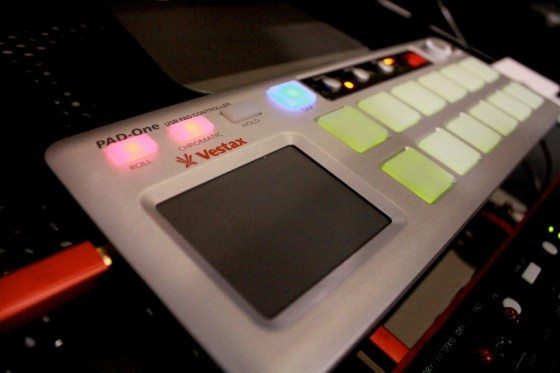
Manufacturer: Vestax
Product Name: Pad One
Price: $249
Release Date: Early Spring
Key Feature: Heavy-duty milled aluminum chasis
Downside: Heavy and Expensive for this controller class- 2 color backlit pads
- Nice feel and bounce to the triggers
- Poor detection of low velocity hits
- Shows each pad’s MIDI value on the LED readout
VMS FOR TRAKTOR
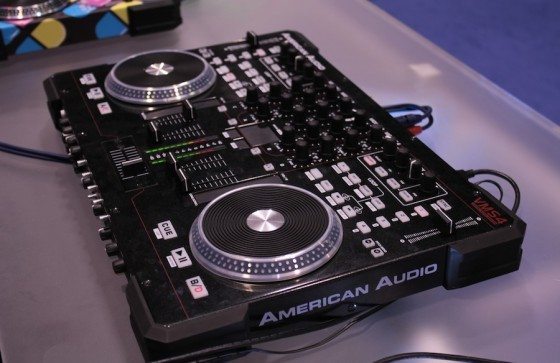
Manufacturer: American Audio
Product Name : VMS-4 (Traktor Edition)
Price: $599
Release Date: Late MarchKey Feature: Ships with a 4-deck version of Traktor LE
Downside: Ships with a 4-deck version of Traktor LE- Same hardware as the original VMS-4
- New black skin looks nicer
- Modified controller labels that match Traktor
TORQ 2 LATE

Manufacturer: M-Audio
Product Name : Torq 2.0
Price: $49 (Existing 1.0 and 1.5 owners) $249 (everyone else)
Release Date: FebruaryKey Feature: Track Morph creates very unique crossfades that do complicated blends for you.
Downside: The UI appears to have been designed as a visual maze intended to confuse the user or possibly as a educational example of how not to layout a DJ interface.- No controller dongle required
- Will work with all controllers
- Track Morph effect is very creative and innovative
- 4 decks with independent levels, EQs, headphone cues
- Multi-Effect stacking features
- More info on the Torq 2 product page, and a demo is also available
- 2.0 is now finally out after a long delay- is it too late?
ANOTHER HERCULES
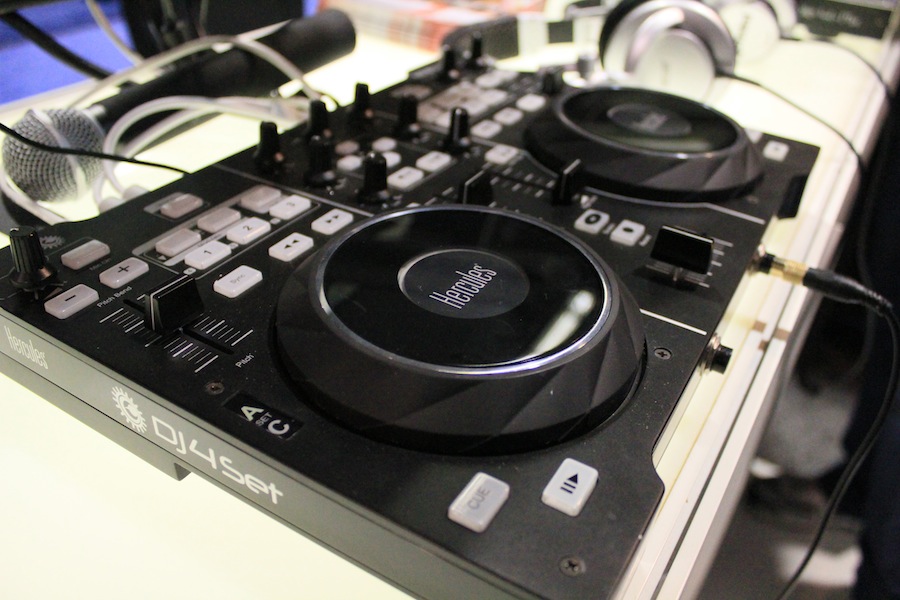
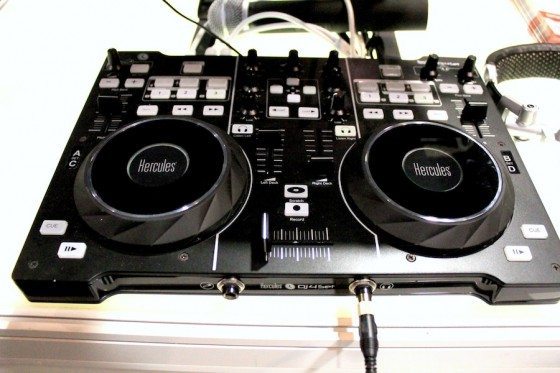 Manufacturer: Hercules
Product Name: DJ4Set
Price: $249.99
Release Date: April 2011Key Feature: Touch-sensitive jogwheels (a first for Hercules)
Downside: Wobbly and poor platter action- 2 stereo ins and 2 stereo outs over built in USB audio interface
- Ships with Virtual DJ LE
- Green or red backlit jogwheels
- Switchable into 4 decks (2 deck mixer)


MEGA MIXER
 Manufacturer: Rane
Product Name: MP25
Price: $1449
Release Date: March 2011
Key Feature: 12 stereo ins and 10 stereo outputs via USB
Downside: Not Serato Scratch certified mixer- ASIO/Core Audio drivers
- Multi-client drivers mean that you can stream audio from multiple applications on one computer simultaneously
- USB loop to VST on a host and back
- 1 USB port
- 5 stereo multi-channel tracking to DAW
THE SL BOX YOU ALWAYS WANTED
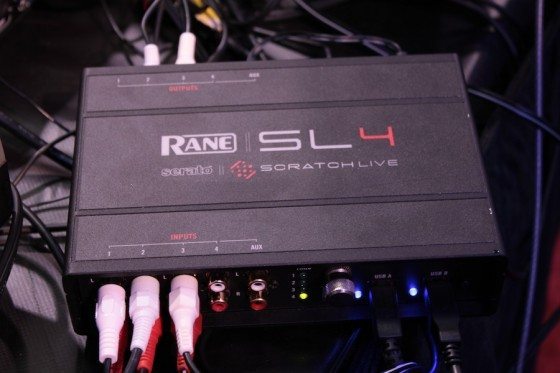
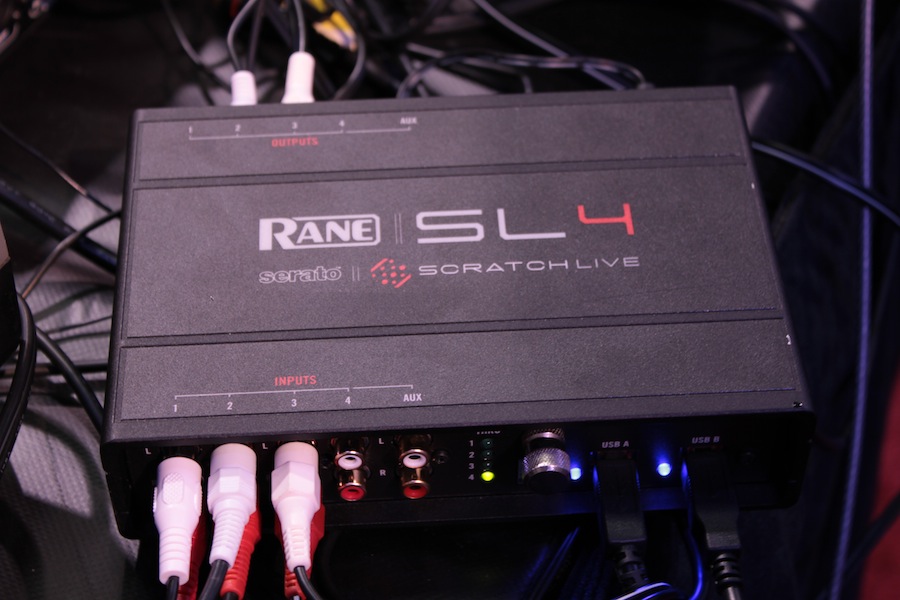
Manufacturer: Rane
Product Name: SL4
Price: $899
Release Date: April 2011Key Feature: 2 USB ports supports a dual laptop setup
Downside: ASIO/Core Audio drivers but no Traktor Scratch support- Switchable channels from phono to line
- 5 stereo in and out via USB
- 96khz or 48khz
- Aux input and output
- Through indicators per channel
BT IN YOUR DAW
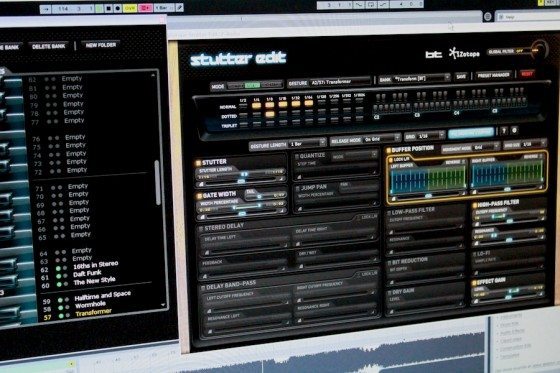
Manufacturer: Izotope
Product Name: Stutter Edit
Price: $249 ($149 preview until February 14th)
Release Date: Available Now
Key Feature: Instant beat mayhem available across a MIDI keyboard.
Downside: Requires a VST host like Ableton- Endless presets and one press stutters that sound great right out of the box, including patches created by BT and Richard Devine
- Very playable combos and effects
- More awesome information and a trial can be found on iZotope’s site
- We’ll be posting an awesome video of Stutter Edit in action soon!
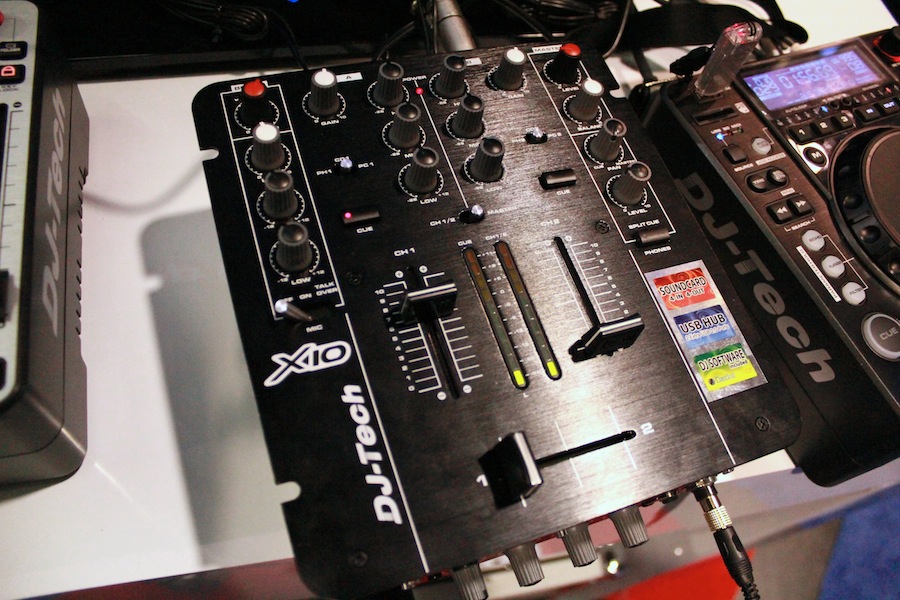
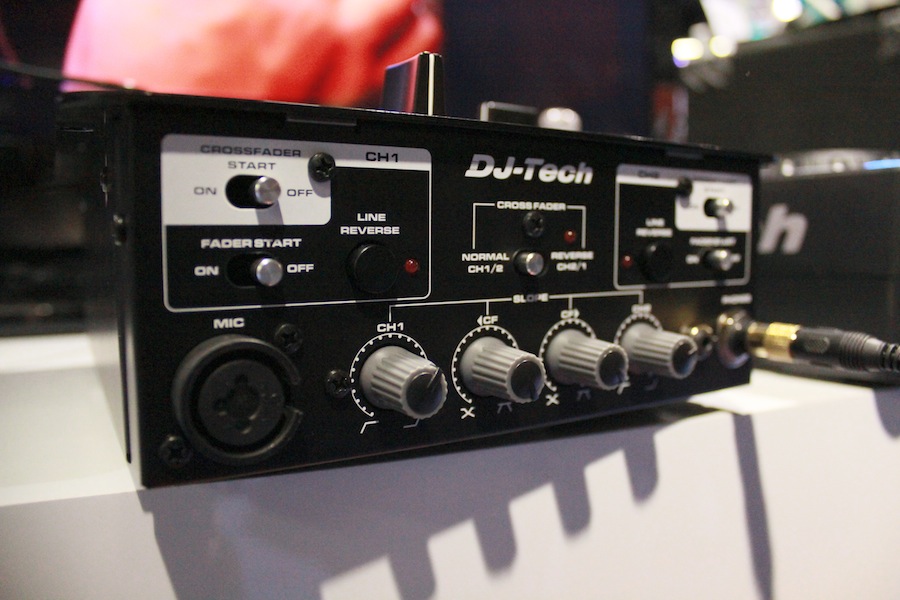
*ENTRY LEVEL USB MIXER

Manufacturer: DJ Tech
Product Name: X10
Price: $349 (MAP)
Release Date: Available Now
Key Feature: 2 stereo ins and outs over USB and 2 port USB hub
Downside: Small, unknown quality on the faders- Ships with Image Line Deckadance
- Booth output and master output
- Curve adjustement for cross-fader and input fader
- Reversible faders
- Mix input


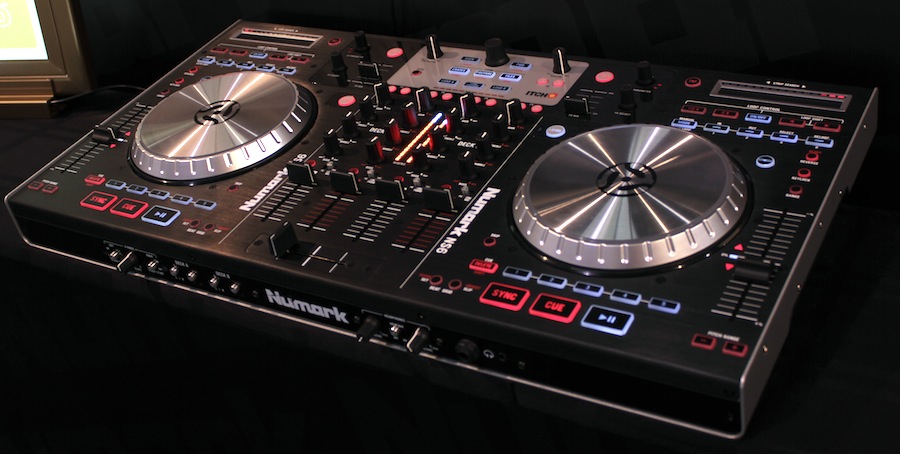
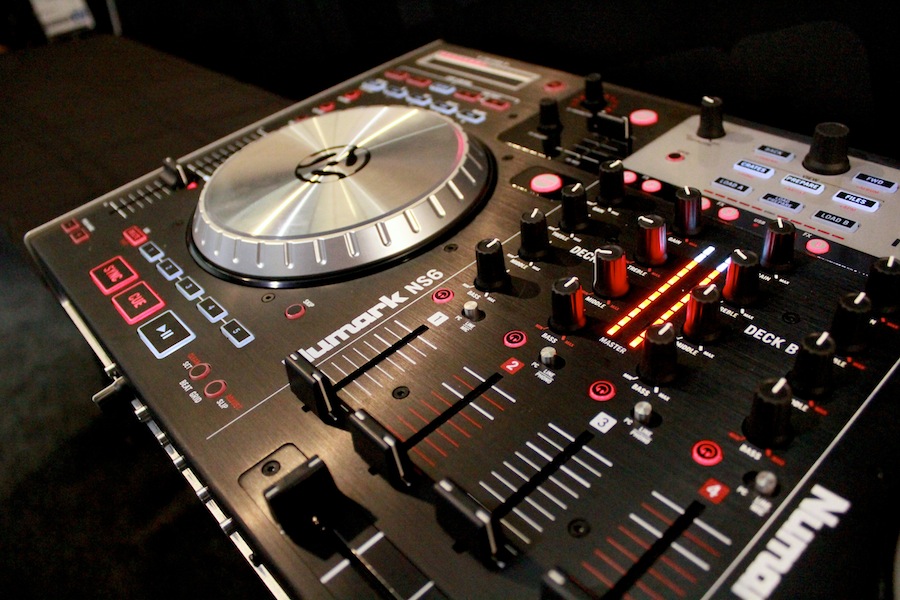
A GREAT ITCH CONTROLLER?

Manufacturer: Numark
Product Name: NS6
Price: $999
Release Date: June 2011Key Feature: 4 channel analogue mixer + software control
Downside: Only 1 stereo output via USB; lighter than the NS7 – but still very heavy (approx 15 pounds)- Strip search with LED location indicator
- Large 6″ jog wheels are substantial, but not heavy
- Good looking and well spaced layout
- Too large for any standard bag, this controller is more portable but far larger than the S4
- Check out the complete stats at the Numark product page

NEW CANS IN TOWN

Manufacturer: Numark
Product Name: Red Wave
Price: $99
Release Date: Febuary
Key Feature: Flexible top makes it easy to form to your head
Downside: We’re wondering what the audio quality is actually like in the club- Special “breathable protein-leather” (anti-sweat) leather keeps your head dry and cool
- Detatchable cord
- Closed-cup, noise isolating design
IPAD DJING GOES HARDWARE

Manufacturer: iDJ Live
Product Name: Numark
Price: $99
Release Date: March
Key Feature: Can control a DJ application on an iPad, iPod, or iPhone
Downside: Ships with no software; single stereo output or dual mono for cueing.- includes iPad stand
- will work with iOS Core midi aware applications
COMPACT MIXVIBES KIT
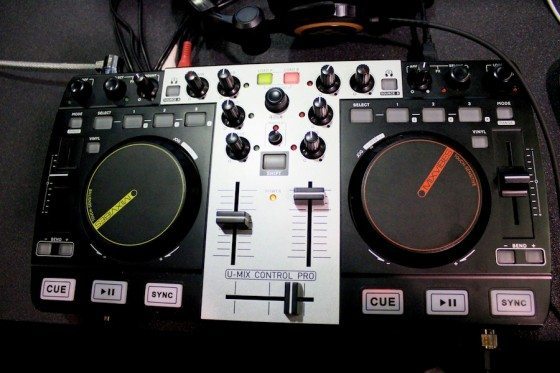
Manufacturer: Mixvibes
Product Name: U-Mix Control Pro
Price: $369 MAP
Release Date: January 30th, 2011
Key Feature: Robust build quality
- USB-powered MIDI controller
- 4-channel audio interface (2 RCA in/2 RCA out), microphone jack input, 2 headphone jack outputs
- touch-sensitive jog wheels
- includes CROSS DJ software


TRAKTOR PRO KEYS
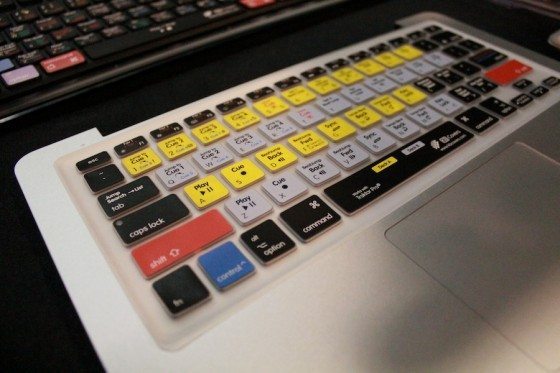 Manufacturer: KB CoversProduct Name: Traktor Key Overlay
Price: $29.99
Release Date: Available NowKey Feature: Matches the default Traktor Pro keyboard shortcuts
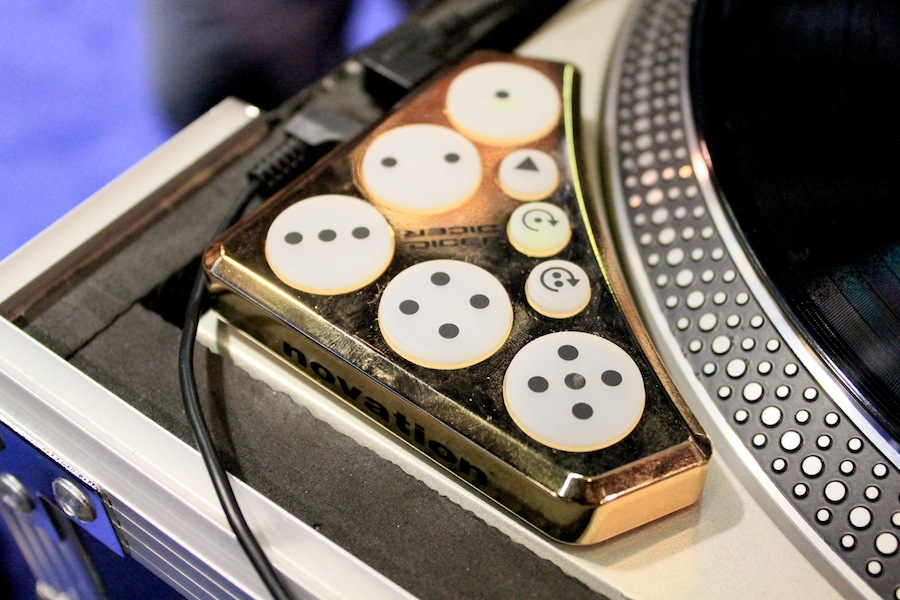
GOLDEN DICERS
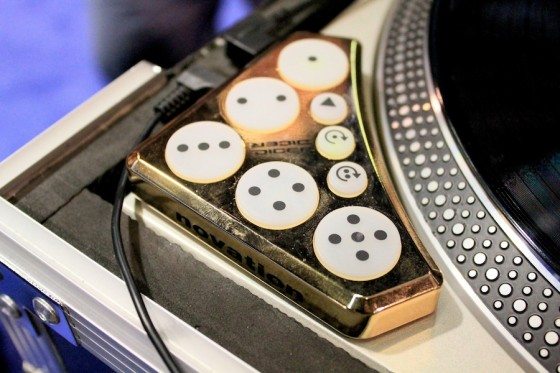
Manufacturer: Novation
Product Name: Golden Dicer / Launchpad / Rane 68
Price: Not for sale – see below
Release Date: Golden Tickets come with every Serato interface purchaseKey Feature: Chance to win gold versions of a Dicer, Launchpad, or Rane 68
Downside: There are only 25, 5 and 1 of each gold controller, respectively- More info on a special Dicer contest on here on DJ TechTools in a few weeks!


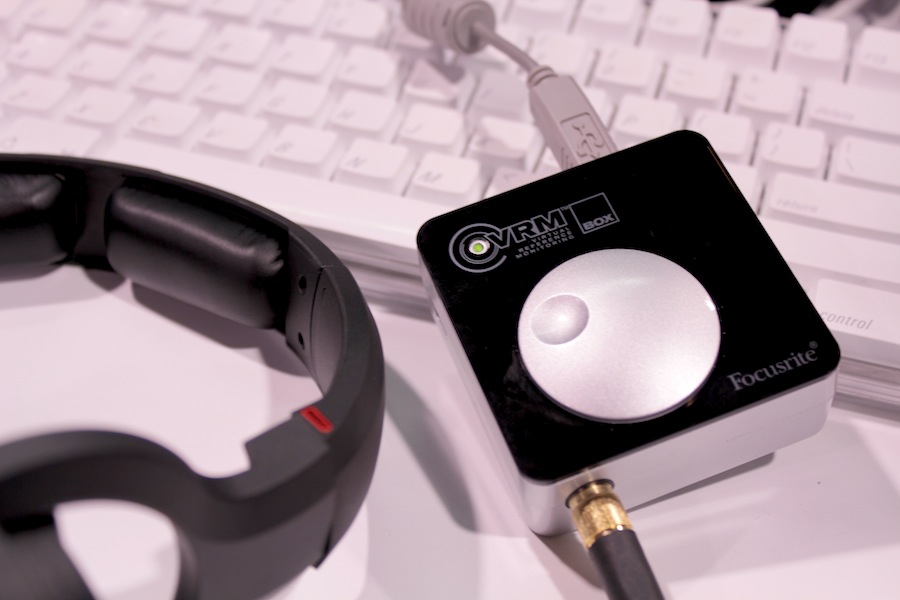
MASTERING/MIXING GETS EASIER
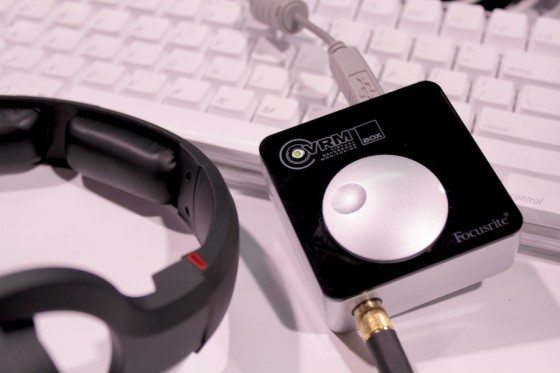
Manufacturer: Focusrite
Product Name: VRM Box
Price:$99
Release Date: Available soon
Key Feature: 108 DB range (MacBook output is about 20 db less); simulated multi-speaker sound
Downside: Only one output (headphone)- allows you to listen to your mix in the headphones as if you are sitting in a studio
- VRM technology emulates all major studio speakers so you can “hear” your mix on various systems without bothering the neighbors or investing in a huge studio!
*1 BAD ASS MIXER
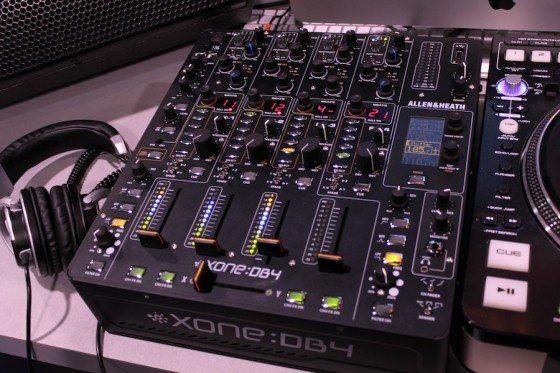
Manufacturer: Allen and Heath
Product Name: DB4
Price: $2899
Release Date: Available now in the US
Key Feature: Customizable onboard FX system
Downside: Only 1 USB port- Fully digital mixer
- Matte black aluminum looks amazing
- Same technology, sound quality and converters as I-live system
- Features Quad FX Core DSP engine, meaning each channel has it’s own effects unit
- EQ zone is flexible (can select as a filter or as one of two types of EQ)


The Top of the Rock Bottom
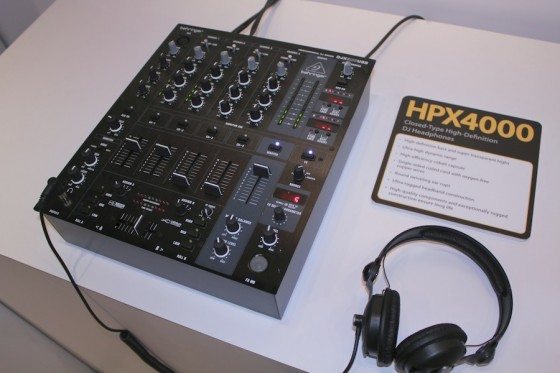 Manufacturer: BehringerProduct Name: DJX-900
Price: $299 Retail
Release Date: Q2 2011Key Feature: spectacularly affordableDownside: USB in/out is limited to one stereo channel- magnetic cross-fader (adjustable crossfader)
- 4-channel mixer, 1 mic input
- over USB interface, 1 stereo-in / 1 stereo-out
PIONEER GOES CONTROLLERIST

Manufacturer: Pioneer
Product Name: DDJ-S1
Price: $1599
Release Date: March
Key Feature: Sleek laptop integration, jogwheels are smooth and solid
Downside: No joy for Serato Scratch Live users; designed for 2-channel use
PIONEER’S TRAKTORPIECE

Product Name: DDJ-T1
Price: $1299
Release Date: February 2011
Key Feature: Effects design mirrors Traktor setup, 4-channel support
Downside: Missing features from S1 – strip search, VU meters.
Again, we’ll be posting more NAMM details, including in-depth “Best of NAMM” articles on our favorite new DJ gear. Keep track of when we post new articles by following us on our Twitter or liking DJTT on Facebook.
- Wire to the Ear’s Winter Namm 2011 Picks

Dave Smith Instruments Tempest. An all new analog drum machine. Awesome. If you listen carefully the demo goes from all the way from 606 to 909ish with some nice Simmons tom emulation and synth stabs. There are a lot of specs but does it matter? A lot of buttons and analog stuff. $2000. link

Avid Torq 2. I secretly always liked Torq better than Traktor. I don’t know why I’ve keep it a secret. It’s just more fun to use and I like the flat interface a lot. I’m not sure 4 decks is better than two. Can you say tiny things to see in a big display? The new Traq Morph feature “blends music tracks in exciting new ways by intelligently applying audio effects during crossfade.”. That could be cool right? Lastly, the software is decoupled from any hardware so you can use it stand alone or with any controller. $250 link

Akai Synthstation 49. I want my car dash to be an iPad. Just the same let’s make my keyboard interface and sound source and iPad too! It’s from Akai so a few MPC pads are included. This will win or loose depending on quality. link

Alesis Studiodock. Professional audio and MIDI I/O for your iPad. Oh… and composite video out. I’m getting very close to being able to play an entire live show off my iPad! link

Izotope Stutter Edit. I love plug-ins like this. Stutter, a Stutter Matrix, Buffer Tricks, Bit Reduction, Pan, Gate, Delay, Filters and more take normal audio and mess it up. $149 link

Arturia Spark. I’m going to tell you right now that this new drum machine from Arturia won’t sound as good as the DSI Tempest. Your going to pay a lot less though and it does have a super fun TR style roll by sequencer. All drum machines are awesome. All of them. $600. link

Rob Papen Punch. I sense a theme at this year’s Namm. I remember it used to be work making killer electronic drum sounds, loops and patterns. Boy to kids have the toys today! If your not an analog purist Dutch Papen’s new VST punch could be of use to you. Will it compete with products like uToniq? Time will tell. link
MORE UPDATES TO COME. I will be adding things I find worthy to this post as the weekend continues.
Related Posts:
- Wild, Colorful Controllers for Guitarists and Ableton Live Users, from Starr Labs

Kids today. They just love their Ableton Live and their Rock Band and their alternative tunings and their Live triggers and touch controllers stuck to their far-out new boutique controllers and high-end MIDI guitars.
Starr Labs has a line of MIDI controllers for Rock Band gamers and musicians on a budget, real guitarists (that’ll be the pro MIDI guitarists, not the gaming ones), and a novel new controller designed especially for Ableton Live. We saw their wireless line earlier today, which interoperates with these; here’s them exploring control.
Gaming and serious musicianship have some surprising overlaps here. Look at the new Ztar, the ZS-XPApros, which is a MIDI guitar – complete with advanced features for hammer-ons, sensitivity, and programmable zones – that also can manipulate Ableton Live right out of the box. Triggers are pre-mapped to Live control layouts. Like the game Rock Band, there’s cheery color coding to match what’s on the screen to what’s on the instrument. Unlike the game Rock Band, you’re playing an actual guitar and controlling advanced music software at the same time. (Show that to the next Xbox gamer who thinks they know it all.)
If you don’t play the guitar, there’s also the airPad, a wireless controller for Ableton with pots, X/Y pad, nav control, and 4×4 light-up pads.
Ztar

The Ztar Z6S-XPA and Z7S-XPA are advanced MIDI guitar controllers with “the industry’s only zero-latency, 6-string x 24-fret touch-sensitive keyed-fingerboard.” (I actually think that’s not hyperbolic; this is the only one I know of.)
Each string trigger has its own tuning, so you get what amounts to a combination between a sophisticated MIDI guitar and an alternative key layout. It’s a controller singularity, as if an alternate-tuning keyboard and a MIDI guitar had a love child.

Specs:
6 Velocity sensitive, Zero latency String Triggers
4-Way programmable Joystick and programmable Mod Wheel
24 fret touch sensitive Ableton Live color-coded fingerboard
Ableton Live control layouts and set-up templates
Ribbon Controller with 2 touch pads (Z7S) / six touch pads (Z6S)
Unlimited String and Fingerboard Tunings
32 Mappable Zones
Programmable Chording System
Arpeggiator & Sequencer
Volume Pedal Port & Sustain Pedal Port
MIDI and USB i/oThe Z6S-XPApro adds six pots.
Scott Caligure has more on the updates to the Ztar.
“The Z6S-XPApro and Z7S-XPApro are newer/updated versions, with improved sensing, latest drivers, multiple sysex ‘layouts’ for various software not only Ableton Live, color coded fingerboard soon to be led-illuminated. We are currently working on the instrument to be a class-compliant device.”
I would call this more like an keyboardaraaytrixocontrollatar. I’m not sure the music this instrument plays has been invented yet. (Microtonal breakcore psychedelia?)
Ztar Rock Controller

The “Rock Controller” is marketed partly for use with the Rock Band 3 Pro Mode, but it looks to me to be just as practical as a MIDI instrument – maybe even a little more so for some users, as it’s a bit simplified in contrast to the Ztar. With USB and MIDI connections, it’s just as happy to be plugged into your computer as an Xbox or PS3, and Starr are quick to say it’s not a toy. With zero-latency string triggers, a four-way joystick, five-way knife switch, muting, and two pedal ports, it’s still out there controller-wise.
And like the others, it has actual strings (to make absolutely certain this isn’t just a toy). But it might be a more down-to-earth alternative if the Ztar is a little too alien or pricey for you. It’s also a huge leap up in quality and versatility from the (also useful) MIDI guitar controllers designed for the game.

airPad for Ableton Live

It might seem a bit out of place here, but the airPad is a more traditional Ableton Live controller. It does boast a novel control layout, and it’s wireless, working in the 2.4G ISM band.
It’s well worth a visit to the Starr Labs site; they make an array of controllers and guitar electronics, including some fascinating alternate keyboard arrays. Makers like this make me wish I’d cashed in on some Web startup boom with an inexplicably-successful idea so I could squander part of my fortune collecting these designs. And for someone, I’m sure, they’ll find a real musical place in performance.
- Virtual DJ Controllers: New Hardware for Serato, Traktor from Pioneer, Numark

What should digital DJing look like? It’s an open question. If you aren’t willing to contend with the (potentially-unreliable) combination of real vinyl control records with computers, the question becomes what DJing technique hardware should embody. Writing for CDM, Ambivalent of Minus Records was most enthusiastic about advanced hardware mixing in Allen & Heath’s Xone:DB4. Boutique manufacturer Faderfox focuses instead on advanced, four-deck effects and control, minus the big, record-mimicking platters.
The big players, though, are focused on a kitchen-sink approach that combines turntable controllers with integrating mix, effect, and transport controls with software. We saw Native Instruments’ Kontrol S4, integrated with their own Traktor software, in August. Now, Pioneer and Numark are showing up to the NAMM trade show with their own entries. Numark has one dedicated to Serato; Pioneer is actually releasing two devices, one for Serato and one for Traktor.
Here’s a snapshot view of that hardware. Interestingly, while other manufacturers (inexplicably, I think) try to time all their announcements for tomorrow, Pioneer and Numark seemed eager to get out ahead of the other announcements.
Pioneer DDJ

Pioneer DDJ-S1
Pricing: US$1599 suggested retail
Software: Serato ITCH
Availability: March 2011Specs:
- Two-deck design (perhaps a demerit, but I think nonetheless likely to be popular, as four deck operation is far from a given with most DJs)
- Inputs for two mics, one aux (RCA)
- Balanced master outputs (2x XLR, 1x RCA)
- Plug-and-play USB connection
- Effect controls, deck controls
- Library navigation, including an LED that shows you position, search, and slip playback (and needle drop-style transport, as on the Numark)

Pioneer DDJ-T1
Pricing: US$1299
Availability: February 2011Specs are similar to the S1, but with:
- Four deck operation
- Less visual feedback: in exchange, you give up the LEDs with position, VUs. (Personally, I like the four decks, but more of this will break down to preference for Traktor versus Serato.)
Smartest marketing pitch: Pioneer touts that the design and audio fidelity both come from pro Pioneer DJ equipment. That could be a strong selling point, and a draw for people who have been loyal to Pioneer hardware who haven’t yet made the leap to the computer – even if the Numark is cheaper and does four channels of mixing.
Good analysis elsewhere: DJ Tech Tools has extensive practical analysis of both designs.
Numark NS6

Pricing: €999/£799 (not sure on US$ price)
Software: Serato ITCHSpecs:
- 4-channel DJ mixer with standalone operation
- 24-bit audio interface with balanced XLR output
- Touch-sensitive, illuminated wheels with 3600 ticks of resolution
- Effect controls, deck controls
- Library navigation
- USB connection, sends standard MIDI messages
Tasteless product branding award goes to… “Strip Search,” a handy feature (emulating needle drop onto tracks) that unfortunately recalls enhanced security at airports. Bad. Worse, on the NS6, it’s “enhanced strip search.”
Good analysis elsewhere: Skratchworx has some smart insights, including the likelihood of Traktor and Virtual DJ mappings and a competitive price. They actually give the nod to Numark here on price, build, and having two extra channels.
Snap Reactions
What about the jog wheels? And what about NI? Pioneer and Numark may both face stiff competition from Native Instruments. NI frequently emphasizes to me the quality of the wheels on their Traktor Kontrol S4, which use eddy current breaks so that as you rotate them faster, resistance increases, making the feel more natural for the control scheme. And speaking of NI, they have announcements coming this week, too.
What about space in a DJ booth? Even in some pretty high-end, spacious clubs, DJ booth real estate is at a premium. It’s hard to imagine comfortably pulling off what Numark has in their screenshot at top. Pioneer has designed their controllers in such a way that they fit over top of the keyboard on your computer. (See image below) Advantage: Pioneer.
Is this really the kind of DJ controller everyone wants? This is my big question. Integrating with DJ software in this way certainly looks practical. But I can’t help but wonder if these designs won’t change over time as DJing is no longer about turntables. That could make unique new touch interfaces or Ableton Live controllers or unusual assemblages of looping hardware something that differentiates DJs.
I think the Pioneer units are prettier. I’m sorry. I’m shallow.
What do you think? Let us know in comments.

























Reblogs for 20110105
- Controlling Video Games With Your Pee – SEGA Brings Awkward Fun to the Restroom
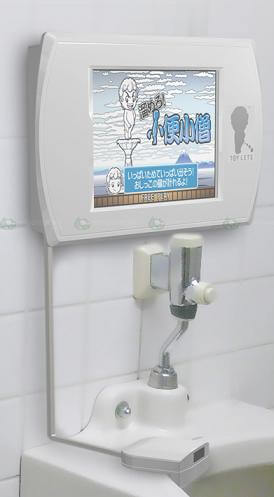
Sega's latest bid for video game dominance: fun while you pee.
In the early ’90s, Sega held 65% of the US video game console market, had millions of fans, and was considered one of the premier creators of modern gaming entertainment. Today, they are helping you play with your pee. The Japan branch of the multinational company recently announced that they are testing their Toylets male urinal video game at select locations around Tokyo. Toylets uses a pressure sensor located on the back of the urinal to measure the strength and location of your urine stream. A small LCD screen above the urinal allows you to play several simple video games including a simulator for erasing graffiti and a variation on a sumo wrestling match. At the end of a game, the screen displays advertisements. Normally when I see something like this I would reach for my enormous “WTF, JAPAN?” flag, wave it around a few times and then return to my life without giving it much further thought. However, I can’t seem to get Toylets out of my mind, because I have a sneaking suspicion that it’s secretly brilliant and maybe even a sign of things to come. Whether you find the concept hilarious, disturbing, or disgusting, urinal video games are simply another way that interactive media could invade every part of our lives. It also shows that no space is safe from digital ads.

Don't like graffiti? Who does? Use your urine to wash it away, and compete in this time trial.
First, let’s have a big round of honesty here. How many guys out there have never made a game out of peeing? (Liars.) Sure, it’s childish, but maybe it’s part of the male psyche. Now, look at Toylets. Very weird, very childish, but…c’mon…if it just so happened to be in the bathroom you were using you would play it, right? The game could be enticing to that silly part of you that finds peeing fun, and it definitely is trying to appeal to its (presumably) male audience. According to Sega and Akihabara News, the four types of video games on the Toylets include:
“Mannekin Pis”: a simple measurement of the urine produced.
“Graffiti Eraser”: where you move your urine back and forth to remove paint
“The North Wind and Her”: a game where you play the wind, trying to blow a girl’s skirt up. The stronger you pee, the stronger the wind blows.
“Milk from Nose”: A variation on sumo wrestling, where you try to knock the other player out of the ring using the strength of your urine flow (shown as milk spraying from your nose). The record of your pee is saved and used as the opponent for the next player. So the game is sort of multiplayer. Toylets even lets you save information onto a USB drive! I fear the MMORPG that will arise from this.
The Milk from Nose game lets you compete against past users for strongest flow. Pee, pee for victory!
Getting men to enjoy using a urinal is simply one side of the equation, however. Making money is the other. Digital signs are already in many bathrooms in major cities in the US. I remember seeing them in New York back as far back as 2007. Mostly these ads were ignored like all other things in the Men’s restroom. But what if that ad was part of a video game…you might pay more attention to it then. Making advertisements interactive is one of the ways in which the marketing medium is evolving, and you can see that phenomenon everywhere on the internet from Facebook to pop-up ads. The other big innovation, making ads personalized, is also creeping from the digital world into reality. Considering that Toylets allows you to save data to a USB, there are chances we’ll see the same sort of customization available there as well.
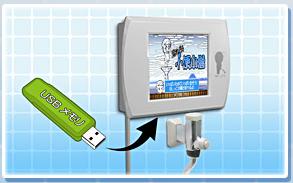
Oh, sure, you'd want to save your high score… WTF, JAPAN!
According to Sega, the Toylets games will be on trial at their testing locations until the end of January 2011. After that, it’s anybody’s guess as to where Sega will take them from there. The era of urinal video gaming could die as quickly as it was born, relegated to the dark corners of WTF history. Or, just maybe, we’ll see more of these interactive bathroom shenanigans in our future. 15 years ago, Sega’s market share fell into the crapper. It would only be fair if the crapper helped them get back on top again.
[image credits: Sega via Akihabara News]
[source: Sega, Akihabara News]Related Posts:
Reblogs for 20110105
- Computers That See You and Keep Watch Over You

(iStockphoto)
High-resolution, low-cost cameras are proliferating, found in products like smartphones and laptop computers. The cost of storing images is dropping, and new software algorithms for mining, matching and scrutinizing the flood of visual data are progressing swiftly.
People will increasingly be surrounded by machines that can not only see but also reason about what they are seeing, in their own limited way.
The challenge arises from the prospect of the rapid spread of less-expensive yet powerful computer-vision technologies.
At work or school, the technology opens the door to a computerized supervisor that is always watching. Are you paying attention, goofing off or daydreaming? In stores and shopping malls, smart surveillance could bring behavioral tracking into the physical world.
More subtle could be the effect of a person knowing that he is being watched — and how that awareness changes his thinking and actions. It could be beneficial: a person thinks twice and a crime goes uncommitted. But might it also lead to a society that is less spontaneous, less creative, less innovative?

Reblogs for 20110103
- Transcending the Human, DIY Style
Anonym, a biohacker, has spent the last several years doing “DIY transhumanism,” learning how to extend her own senses.
“The existing transhumanist movement is lame. It’s nano everything. It’s just ideas,” she says.
She inserted small metal discs of neodymium metal, coated in gold and silicon, which give off mild electric current when in a electromagnetic field. When inserted under the fingertips, this current stimulates the fingers’ nerve endings, allowing the bearer to literally feel the shape and strength of electromagnetic fields around power cords or electronic devices.
Her next project: a small compass chip with a power coil that can be charged externally, and output in the form of neural-grade electrodes, all to be implanted near her left knee.
She’s put herself in the hospital several times.
Reblogs for 20110102
- Debtris
Our first animation. Enjoy!
$US version – see the video on youtube
£UK version – see the video on youtube
Data: http://bit.ly/debtris
We’ve been honing our animation skills. Expect more films, motion infographics and ‘info-mations’ in 2011. Follow us on Youtube for more.
Design & direction: David McCandless
Animation: Miles Tudor, Dom Del Torto @ Big Animal
Music: Daniel Pemberton
Data: http://bit.ly/debtris

Reblogs for 20101231
- Technology 25 Years Hence
“The law of accelerating returns is the only reliable method I know that allows us to forecast at least certain aspects of the future,” said Ray Kurzweil in “Why Do We Need Predictions?,” a New York Times special feature published Monday.
“A computer that fit inside a building when I was a student now fits in my pocket, and is a thousand times more powerful despite being a million times less expensive. In another quarter century, that capability will fit inside a red blood cell and will again be a billion times more powerful per dollar.”
- What is Traitorware?
Your digital camera may embed metadata into photographs with the camera’s serial number or your location. Your printer may be incorporating a secret code on every page it prints which could be used to identify the printer and potentially the person who used it. If Apple puts a particularly creepy patent it has recently applied for into use, you can look forward to a day when your iPhone may record your voice, take a picture of your location, record your heartbeat, and send that information back to the mothership.
This is traitorware: devices that act behind your back to betray your privacy, says EFF.
Transcending the Human, DIY Style
Anonym, a biohacker, has spent the last several years doing “DIY transhumanism,” learning how to extend her own senses.
“The existing transhumanist movement is lame. It’s nano everything. It’s just ideas,” she says.
She inserted small metal discs of neodymium metal, coated in gold and silicon, which give off mild electric current when in a electromagnetic field. When inserted under the fingertips, this current stimulates the fingers’ nerve endings, allowing the bearer to literally feel the shape and strength of electromagnetic fields around power cords or electronic devices.
Her next project: a small compass chip with a power coil that can be charged externally, and output in the form of neural-grade electrodes, all to be implanted near her left knee.
She’s put herself in the hospital several times.
Reblogs for 20101224
- US to offer plethora of prize competitions to solve tough problems
The America Competes Act, renewed by Congress this week, now gives every federal department and agency the authority to conduct prize competitions.
According to the Office of Science and Technology Policy blog: “Whether it’s developing new products that will be manufactured in America, or getting and using energy more sustainably, or improving health care with better therapies and better use of information technology, or providing better protection for our troops abroad and our citizens at home, innovation will be key to our success.”
The prize competition idea follows on some very successful challenge programs offered by the X Prize Foundation and the government’s own Defense Advanced Research Projects Agency and Challenge.gov site.
- Man Cured of HIV Using Stem Cells. Fluke or Hope?

Timothy Ray Brown has been cured of HIV.
Timothy Ray Brown has officially been declared cured of HIV. A US citizen living in Germany with HIV, Brown was treated for leukemia in 2007 at the Charite University of Medicine in Berlin. As part of his treatment, he received stem cell transplants from a donor with a naturally occurring genetic resistance to HIV. In February of 2009, his doctors published a report in the New England Journal of Medicine detailing the apparent absence of the HIV virus in his system after being treated for leukemia. Now, in the medical journal Blood, those doctors have described the even more rigorous examination of his body, including looking at brain and spinal samples, that they performed to demonstrate that Brown no longer has HIV. The virus isn’t simply in regression, it’s gone. While the exact methods used to remove HIV from Brown will likely prove too severe to see use in other patients, his cure raises the possibility of new avenues of attack against the disease. Should this case raise our hopes about a universal cure for HIV/AIDS? Yes, but with some big caveats.
Brown’s path to a cure was not for the faint of heart. I discussed part of his case history in my coverage of his condition in the beginning of this year, but it’s remarkable enough to bear repeating. Having contracted HIV in the ’90s, Brown was being successfully treated using anti-retroviral drugs (HAART) but developed acute myeloid leukemia in 2006. To treat the cancer, Brown was subjected to three rounds of chemotherapy, drastically impairing his immune system. It also induced renal failure, and so his HAART treatments had to end. Predictably, the levels of HIV in his system spiked. After three months he was able to resume standard HIV therapy and his levels dropped again. That’s when the cancer returned stronger than ever. With his infected immune system nearly destroyed, he was ready to have it augmented by someone else’s. Brown received bone marrow stem cell transplants from a donor, a process that carried a significant risk of death (about one in three don’t survive) but that would allow the donor’s immune system cells to grow inside him. A year after this dangerous procedure he had to go through it again. Despite all these opportunities for disaster, Brown survived.
More than that, his HIV was gone. Brown’s stem cell donor had been selected because he possessed a genetic variation that causes a receptor (CCR5) to be missing from his cells. This variation occurs in around 1% of people of Caucasian descent and has been known to confer a strong resistance to select strains of HIV by interfering with the way the virus enters human cells. It’s thought that the damage to his immune system, followed by the stem cell transplant, caused all traces of HIV to be removed from Brown’s body. Chemo killed off infected cells and the new resistant cells kept the virus from rebounding.
All this came at a price, however. Brown has been on immuno-suppressive drugs for 38 months. Following his transplant (17 months) he developed a neurological condition that required a brain biopsy and sampling of cerebrospinal fluid. According to AIDSMap, that neurological condition led to injury including temporary blindness, and Brown is still undergoing physiological and speech therapy to help him recover.
During his long recovery, doctors continually took samples of his immune system, measured the level of HIV antibodies, and examined the biopsied brain sample. Every indicator showed that Brown’s immune system was not only being populated by the donor cells, but that the viral load in his body was apparently zero. In Blood, the doctors at Charite University of Medicine point out that the donor cells are still susceptible to certain strains of HIV. In fact, Brown had those strains! Despite this remaining susceptibility, the virus never rebounded. It looks to have been completely cleared. As I said when discussing Brown earlier this year, the complete removal of HIV with stem cells containing a genetic variant that shouldn’t have provided him universal protection is very curious. It shows that there is still much to learn about genetic resistance to the virus.
Brown’s own clinical history has proven harsh, but his ongoing legacy is going to provide some remarkable hope to HIV patients everywhere. Will we subject patients to multiple rounds of chemotherapy followed by stem cell transplants from special donors with faulty CCR5 receptors? I certainly hope not, especially considering how effective HAART can be when managing HIV/AIDS. Repeating Brown’s ordeal would be unnecessarily risky for patients. One in three would likely die! Yet there are parts of his treatment that could be pursued. According to AIDSMap, doctors have explored the possibility of collecting large stores of stem cells from donors with the right kind of CCR5-based resistance. Researchers are also performing clinical trials to study ways in which the CCR5 receptor could be knocked out of cells using gene therapy. Why receive a transplant when you can just teach your cells to bar their doors against HIV?
Genetic therapies may prove to be a possible cure for HIV/AIDS. There are, in fact, multiple targets for such treatments. We recently discussed how variations in the HLA-B protein and gene can also provide protection against the disease. It will take several years to understand and perfect such roadblocks that we can use to stop the spread of HIV in the body. While gene therapies are promising avenues of research, and are reinforced in theory by Brown’s case history, such cures won’t be around for a while.
That long-term hope without short-term payoff is how I would characterize this case in general. The power of the CCR5 variation and its ability to be transferred to others through stem cell transplant is remarkable. Yet while we may see Brown’s treatment repeated, it is simply not a practical therapy for most HIV patients. Eventually, however, we’ll have enough genetic targets, and enough experience hitting them, that we’ll be able to “upgrade” the immune systems of the HIV infected with minimal risk to their lives. With any luck, such treatments will be cheap enough that they can be provided to people all over the world. Who knows, maybe we’ll even find a way to provide such ‘natural’ resistance as a preventative measure. Brown’s heroic journey through chemotherapy and stem cell transplants, his defeat of cancer and HIV, and his living proof that a cure is possible, make for a momentous occasion. It should give us hope, but it will also demand patience.
[image credit: Peter Rigaud]
[sources: Hutter et al 2009, NEJM; Allers et al 2010, Blood; AIDSMap]Related Posts:
Reblogs for 20101222
- Visualizing Bloodtests
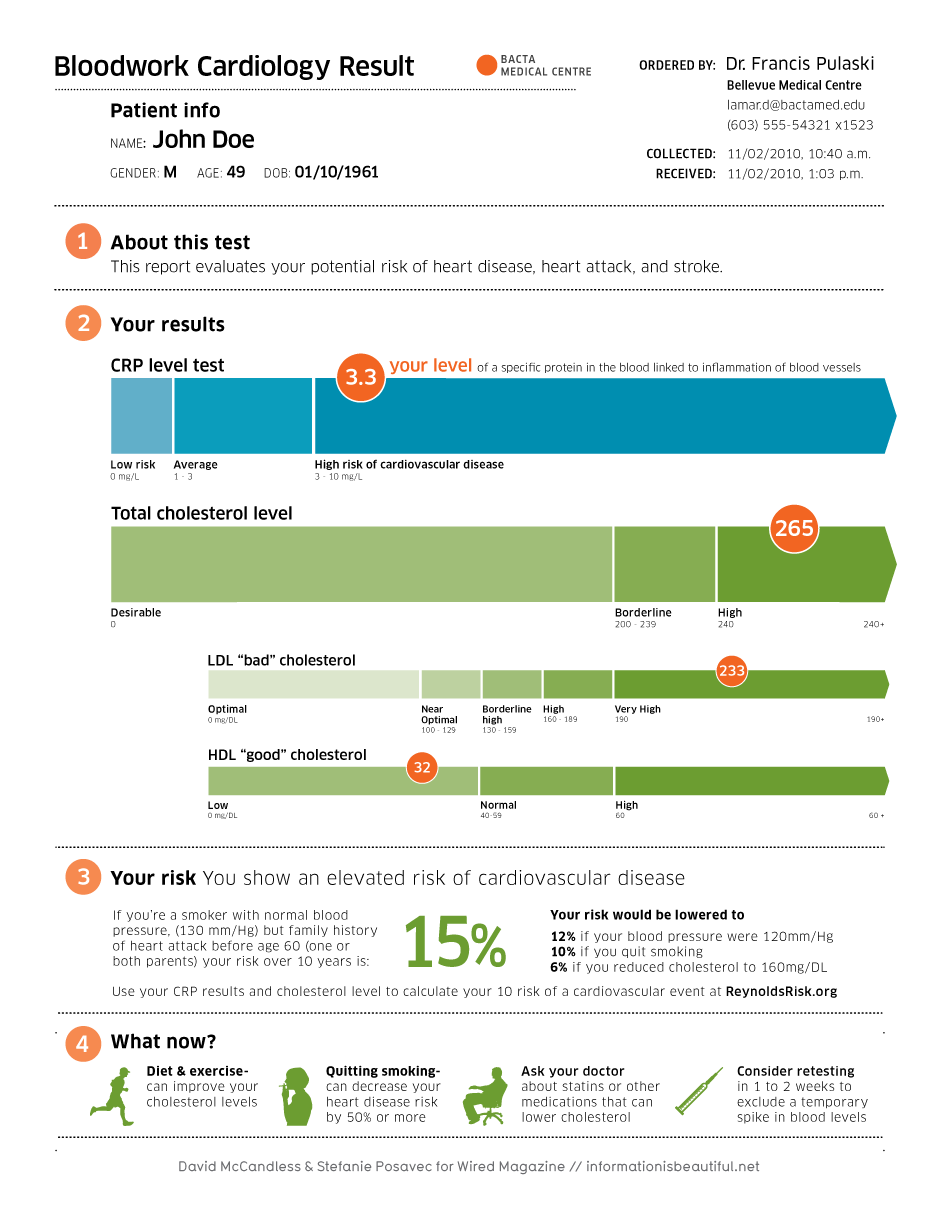
We were happy to win a design competition in Wired US this month.
It was around re-envisioning medical data. Specifically, blood test results. Which suck, design-wise. They still look like secret missives from the CIA circa 1965. Yet their contents are vitally – perhaps mortally – important.
Our challenge was to approach a cholesterol level test. First it looked like this.

Then we designed it thus:

Our goal wasn’t just a polish job. We worked hard on the information too. So there was context for all the facts and figures. Ideally, anyone, of any educational background, could get the gist and plan their next move.See a hi-res version here. Or download a PDF.
(The image is creative commons. All non-commercial use is cool.)
Great work too from Mucca Design and Jung Und Wenig
DESIGN & RESEARCH: David McCandless & Stefanie Posavec
ADDITIONAL DESIGN: Stefanie Posavec, Joe Swainson
CREATIVE DIRECTOR: Tim Leong @ Wired